Solution — SaaS Product Development
Build the product. Then build the business around it.
We partner with founders and product teams across the full SaaS lifecycle — strategy, design, engineering, AI features and the growth engine that brings customers in.
The problem
Most SaaS products don’t fail on code. They fail on focus.

Teams build too much before validating, choose architectures that can’t scale, or launch a solid product with no plan to acquire customers. Each is avoidable with the right sequence of decisions.
Because we cover strategy, design, engineering and growth, we can help you make those decisions together — rather than handing off between disconnected vendors.
Signs this is you
- You have a validated idea but no product team
- Your MVP is growing into a fragile product
- Release cycles are slowing down
- Users sign up but don’t activate
- The product works, but pipeline is thin
Approach
How we solve it.
- 01
Product strategy
Audience, problem, positioning and the smallest release that proves value.
- 02
UX & design
Onboarding, core workflows and a design system that scales with the product.
- 03
MVP engineering
Multi-tenant foundations, authentication, billing and the core feature set.
- 04
Iterate
Analytics, user feedback and rapid releases to improve activation and retention.
- 05
Grow
Positioning, website, SEO and conversion to build a repeatable acquisition channel.
Capabilities
What we bring together.
Services involved
- 04Software & Product EngineeringSaaS, custom software and apps — from MVP to scale.
- 02Brand, Creative & ExperienceBrands and interfaces people understand, trust and remember.
- 05AI & AutomationPractical AI connected to real business workflows.
- 06Digital GrowthVisibility, demand and conversion — as one system.
- 01Strategy & ConsultingClear direction before anything gets built.
Examples
What this can look like.
Illustrative engagement types — not client case studies. See Work for published projects.
Vertical SaaS MVP
An industry-specific platform launched with a focused feature set and a scalable multi-tenant foundation.
AI copilot feature
An assistant embedded inside an existing SaaS product that helps users complete key tasks faster.
Product-led growth website
A marketing site and content engine designed to drive trials and demos.
What we aim to improve
- A faster path to first customers
- Architecture that scales with demand
- Better activation and retention
- One team accountable across product and growth
Industries
Where we apply it.
- 01SaaS & TechnologyBuild, scale and grow software products.
- 02Finance & Financial ServicesTrusted digital experiences for financial businesses.
- 03HealthcarePatient-friendly digital experiences, built responsibly.
- 04EducationDigital experiences for learners and institutions.
- 05Real EstateDigital experiences and automation for property businesses.
Blog
Related thinking.
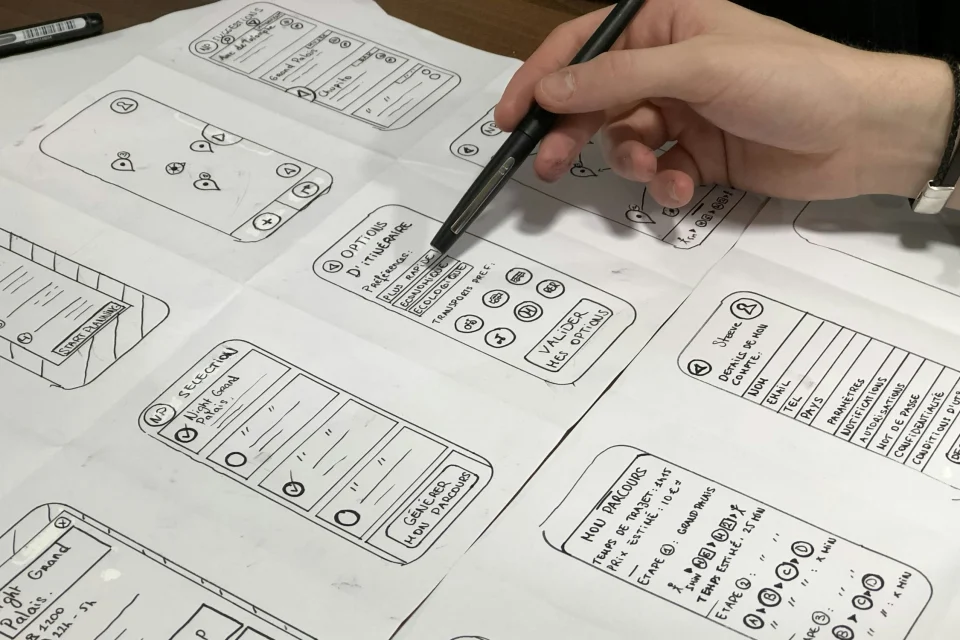 How to Scope and Build a SaaS MVPHow to scope a SaaS minimum viable product around one customer and one core workflow, get multi-tenancy and security right, and launch to learn…Read the article
 Build vs Buy Software: A Decision Framework for Growing BusinessesA practical framework for deciding when to buy, build or combine both, covering differentiation, total cost of ownership, vendor risk and exit planning.Read the article
FAQ
Questions, answered.
Can you work with our in-house team?
Yes. We can build the full product or add capacity to your team in design, engineering, AI or growth.
What does a SaaS MVP include?
Typically authentication, user and account management, the core workflow that delivers value, basic billing, analytics and an admin area. The exact scope is defined in discovery.
Can you help after launch?
Yes. Post-launch iteration and growth is where most SaaS value is created, and we support both product development and customer acquisition.
How do you validate a SaaS idea before building the full product?
Validation starts with product strategy: defining the audience, the problem, positioning and the smallest release that proves value. User and market evidence, prototypes and early conversations with target customers help test demand. The MVP then focuses on the core workflow, so you learn from real users before investing in a larger feature set.
What is multi-tenant architecture and why does it matter for SaaS?
Multi-tenant architecture lets one application serve many customer accounts while keeping each account’s data separate. It matters because it makes onboarding new customers, releasing updates and scaling more efficient than running separate copies for each client. We build this foundation, along with authentication, roles and billing, into the MVP so it does not need rework later.
How can we improve activation and retention in our SaaS product?
Start with product analytics and user feedback to see where new users stall. Improvements often come from clearer onboarding, simplified core workflows and in-product guidance. We then release changes in short cycles and measure their effect on activation and retention, so each iteration builds on evidence rather than assumptions.
How do we fix an MVP that is becoming fragile and slow to release?
We begin with a technical review of architecture, code quality and the delivery process to find what is slowing releases and causing bugs. The fix is usually incremental: strengthening foundations, adding automated tests and refactoring high-risk areas while you keep shipping, rather than stopping everything for a rewrite.
How do SaaS companies build a repeatable acquisition channel?
Many build one through positioning, a product-led website and content that ranks for the problems their product solves, connected to trials or demos. We combine SaaS SEO, conversion optimization and analytics so you can see which pages and topics bring qualified signups, then invest more in what works.
More solutions
Other problems we solve.
- 01AI TransformationIdentify, build and implement practical AI systems.
- 02Digital TransformationModernize digital experiences, products and processes.
- 03Business AutomationReduce repetitive manual work with software, integrations and AI.
- 04Ecommerce TransformationImprove ecommerce experience, technology, conversion and growth.
- 05Customer ExperienceImprove the journey from discovery to conversion and retention.
- 06Growth TransformationConnect SEO, content, UX and conversion into one growth system.
Ready to talk about SaaS Product Development?
Tell us about the challenge. We'll help you work out the right first step.