To scope and build a SaaS MVP, start with one specific customer and one painful problem, define the single core workflow that solves it, and cut everything else. Validate demand before writing code, build the core workflow properly on a secure multi-tenant foundation, use proven services for commodity features and launch to real users quickly so you learn what to build next.
A minimum viable product is one of the most misunderstood ideas in software. Some teams treat it as an excuse for a sloppy first version; others keep adding features until the “minimum” is gone. This guide explains what an MVP is for, how to scope one, what a SaaS MVP genuinely needs from day one and how to run the build and launch.
What an MVP is, and what it is not
Eric Ries, who popularized the term in The Lean Startup, defined it in 2009 as “that version of a new product which allows a team to collect the maximum amount of validated learning about customers with the least effort.”
The important word is learning. An MVP exists to answer your riskiest questions: Do these customers really have this problem? Will they use our solution? Will they pay for it? Everything in the scope should serve those questions.
That definition also clarifies what an MVP is not:
- It is not a prototype nobody uses. Clickable mockups are valuable for early feedback, but a SaaS MVP should let real customers do real work.
- It is not version 1.0 with fewer polish points. It is deliberately narrow: one workflow done well, not ten done badly.
- It is not an excuse for poor security. If customers put their data into your product, it must be protected from the first day.
Why scope discipline matters so much
Building the wrong thing is one of the most expensive mistakes a software business can make. In a March 2026 analysis of post-mortems and shutdown announcements from 431 venture-backed companies that closed since 2023, CB Insights found poor product-market fit cited as a reason in 43% of cases. Only running out of capital ranked higher, and the report describes that as “almost always the final cause of death, not the root problem.”
A tightly scoped MVP reduces that risk in two ways. It gets a real product in front of customers sooner, so you find out earlier whether you are on the right track. And it spends less of your runway on features that may turn out not to matter.
Step 1: Define your customer and problem precisely
Before any feature list, write down who the product is for and what problem it solves, as specifically as you can.
- Customer: not “small businesses,” but “operations managers at US home services companies with 10–50 field technicians.”
- Problem: not “scheduling is hard,” but “dispatchers spend hours each morning rebuilding schedules by hand when jobs are canceled.”
- Current alternative: what they do today, such as spreadsheets, a legacy tool, phone calls or nothing.
- Why now: what has changed that makes this worth solving now.
If you cannot describe a specific customer and a specific problem, you are not yet ready to scope an MVP. You are ready for more customer discovery.
Step 2: Validate demand before you write code
Much of the most valuable validation happens before development starts, and costs very little.
- Problem interviews. Talk to potential customers about how they handle the problem today. Ask about recent, specific examples, not hypothetical preferences.
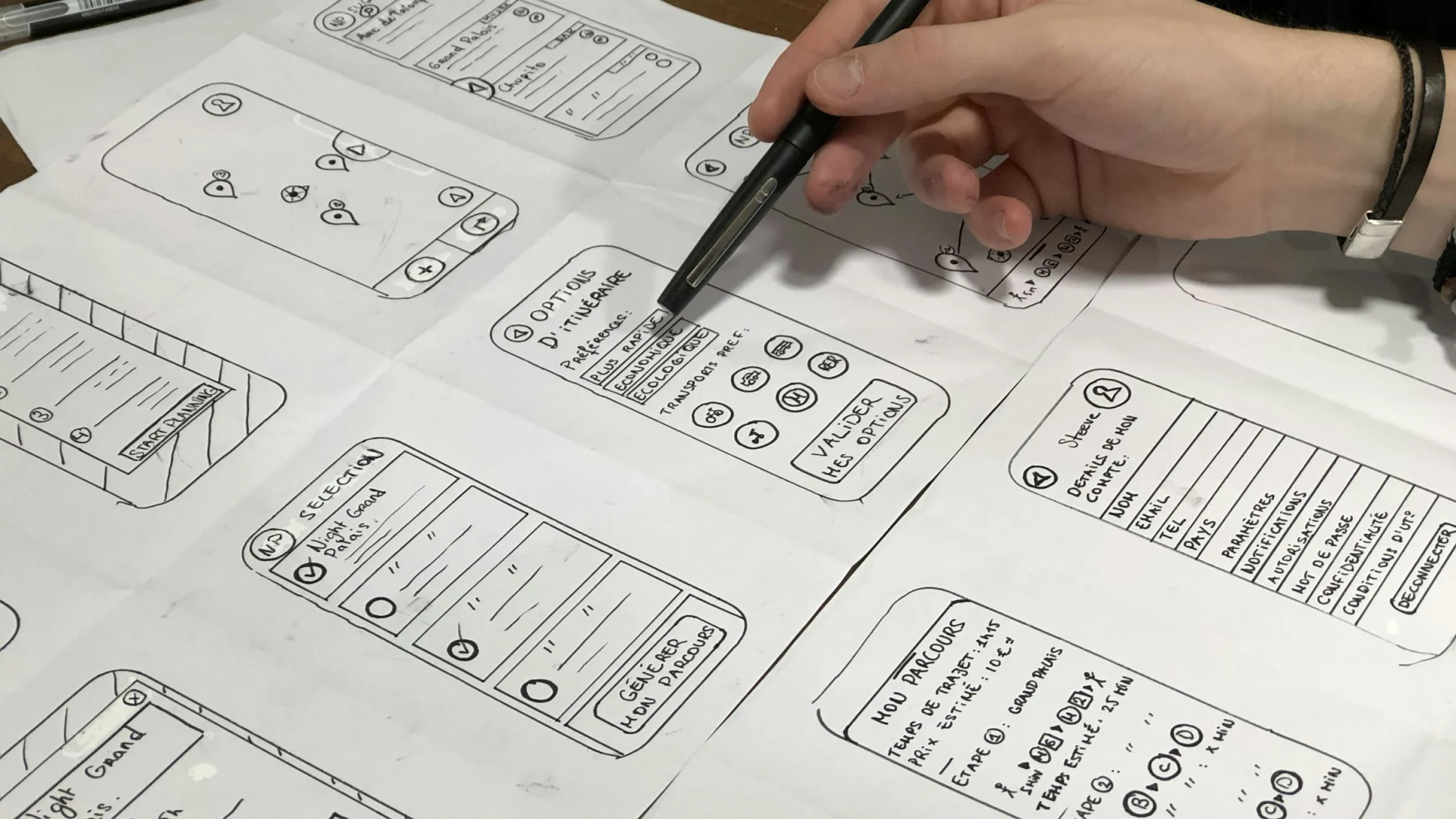
- Solution walkthroughs. Show sketches or a clickable prototype and watch how people react to the core workflow.
- Commitment tests. Ask for something that costs the customer a little: a waitlist signup with real details, a letter of intent, a pilot agreement or a preorder.
Usability research supports starting small and iterating. Jakob Nielsen’s widely cited analysis argues that testing with five users typically reveals about 85% of the usability problems in a design, and that several small rounds of testing and redesign are better than one large study. He also notes that products with distinctly different user groups need a few participants from each group.
Step 3: Map the core workflow and cut ruthlessly
Identify the single end-to-end job your customer hires the product to do, from first action to the moment they get value. That workflow is your MVP. Everything else is a candidate for later.
A simple way to scope is to sort every proposed feature into three groups:
| Category | Test | Examples |
|---|---|---|
| Must have | The core workflow breaks or cannot be trusted without it | Sign-up and login, the core workflow itself, data security, basic account settings |
| Should have soon | Customers will ask for it quickly, but can work around it for a few weeks | Bulk import, notifications, simple reporting |
| Later | Nice to have, or only matters at scale | Advanced analytics, custom themes, a marketplace, mobile apps, complex role hierarchies |
Be especially skeptical of features requested by one prospect, “just in case” settings and anything justified by what a mature competitor offers. Competitors built their feature set over years; you need to prove one workflow first.
Also consider manual workarounds. Some parts of the experience, such as onboarding, data imports or certain reports, can be handled by your team behind the scenes at first. That lets you learn what customers actually need before automating it.
Write a one-page scope document
Capture the result in a short scope document that everyone on the team can read in a few minutes. It should state the target customer and problem, the core workflow step by step, the must-have features, what is explicitly out of scope for now, the assumptions the MVP is meant to test and the measures you will use to judge success. The “out of scope” list is as important as the feature list: it gives the team a clear, agreed answer when new ideas appear mid-build, and it records the ideas so nobody feels they have been lost.
Revisit the document at the end of each iteration. If scope needs to change, change it deliberately and write down what was traded away.
Step 4: Decide what to build and what to buy
In a SaaS MVP, most of the engineering effort should go into the workflow that makes your product different. Commodity capabilities are usually better bought than built:
- Authentication: established identity providers or well-maintained open-source libraries, rather than hand-rolled password handling.
- Billing and subscriptions: payment platforms such as Stripe Billing can handle recurring payments, trials and renewals, pricing models including flat-rate, per-seat and usage-based, invoicing and a self-service customer portal.
- Email and notifications: transactional email and messaging services.
- Hosting and infrastructure: managed cloud services, so you are not operating servers yourself.
- Analytics and error monitoring: existing tools to see how people use the product and where it breaks.
Every service you adopt is also a dependency, so choose providers with clear documentation, data export options and pricing that stays sensible as you grow. Our build vs buy decision framework goes deeper on these trade-offs.
Work with GeekOzy
Build the software your business actually needs.
Tell us what you're working on. We'll come back with honest thinking on a practical next step.
Start a projectExplore Software & Product EngineeringStep 5: Get the SaaS foundations right from day one
Some shortcuts are fine in an MVP. Others are expensive or dangerous to fix later. These foundations are worth getting right early.
Multi-tenancy and data isolation
A SaaS product serves many customers, or tenants, from shared software. AWS’s SaaS guidance puts it bluntly: tenant isolation is “fundamental to the design and development of software as a service (SaaS) systems,” and crossing that boundary “would represent a significant and potentially un-recoverable event for a SaaS business.”
The AWS Well-Architected SaaS Lens describes three broad models: a silo model, where tenants get dedicated resources such as a separate database; a pool model, where tenants share resources; and a bridge model that mixes the two. Many MVPs start with a pooled model for simplicity and cost, which makes enforcing isolation in the application and database essential. Database features can help; PostgreSQL, for example, supports row security policies that restrict which rows a given user’s queries can return or modify.
Security basics
Use the OWASP Top 10:2025 as a baseline checklist. Its first category is broken access control, which is closely related to tenant isolation, and the list also covers security misconfiguration, software supply chain failures, cryptographic failures, injection and authentication failures, among others. For an MVP, that means at minimum: enforced authorization checks on every request, encrypted connections, secure secrets management, dependency updates and logging of security-relevant events.
Operational basics
- Automated backups, with a tested restore.
- Separate development, staging and production environments.
- Error monitoring and basic uptime alerts.
- An automated deployment process, so shipping fixes is quick and routine.
Privacy and compliance
Know what personal data you collect and why, publish a clear privacy policy and understand any sector obligations your customers bring with them, for example in healthcare or financial services. Requirements differ by sector and state, so review your obligations with legal counsel before launch.
Step 6: Design an experience that earns trust
An MVP can be small without looking careless. B2B buyers judge credibility quickly, and a confusing or unpolished core workflow can make a good product look risky.
- Prioritize clarity over decoration. A clean, consistent interface built on a simple design system is enough.
- Design the first-run experience. The path from sign-up to first value is where many trial users drop off. Make it short and guided.
- Handle empty and error states. Tell users what to do next when there is no data yet or something goes wrong.
- Build in accessibility. Following the W3C’s Web Content Accessibility Guidelines (WCAG 2.2 is the latest version) from the start is far easier than retrofitting later, and it widens the set of people who can use your product.
A credible brand matters too: a clear name, a straightforward website that explains who the product is for and consistent visual identity across the site and the app. Our Brand, Creative & Experience team focuses on exactly this combination of positioning and product design.
Step 7: Build in short, measurable increments
Timebox the MVP build and structure it as a series of short iterations, each ending in working software that someone outside the development team has tried.
A practical sequence often looks like this:
- Foundations: project setup, environments, authentication, tenant model and deployment pipeline.
- Core workflow, thin slice: the simplest end-to-end version of the main job, usable by internal testers.
- Core workflow, complete: edge cases, validation, error handling and the must-have supporting features.
- Billing, onboarding and instrumentation: subscriptions or pilot terms, first-run experience and analytics.
- Private beta: a small group of design-partner customers using the product for real work.
How long this takes depends on the complexity of the workflow, integrations and the team’s size. Resist the urge to extend the timebox by adding scope; if something important emerges, trade it for something already planned.
Step 8: Launch, measure and decide what comes next
Decide before launch which signals will tell you the MVP is working. Useful measures for a SaaS MVP include:
| Question | Signal to track |
|---|---|
| Do people get started? | Sign-up to activation rate: the share who complete the core workflow at least once |
| Do they come back? | Weekly or monthly active accounts; retention by sign-up cohort |
| Does it solve the problem? | Time saved or errors avoided, gathered through interviews and product data |
| Will they pay? | Trial-to-paid conversion, pilot-to-contract conversion, willingness to renew |
| What is missing? | Support requests, feature requests and where users drop out of the workflow |
Combine quantitative data with regular conversations. Numbers show what users do; interviews explain why. After each cycle, choose one of three paths: persevere and deepen the current direction, pivot the customer, problem or solution based on what you learned, or stop and redirect resources.
Common SaaS MVP mistakes
- Building for everyone. A product aimed at every business type rarely fits any of them well.
- Skipping discovery. Writing code is often the slowest and most expensive way to test an idea.
- Gold-plating infrastructure. Planning for enormous scale before you have customers wastes time; plan for sensible growth instead.
- Cutting security to save time. Tenant isolation and access control are not “later” features.
- No instrumentation. If you launch without analytics, you lose the learning the MVP exists to produce.
- Treating launch as the finish line. The MVP is the start of the product, not the end of the project.
The bottom line
A good SaaS MVP is narrow, real and secure. It targets one specific customer and one painful problem, delivers a single core workflow well, buys commodity capabilities rather than rebuilding them, gets tenant isolation and security right from the start and launches with clear measures of success. Everything else can wait until real customers tell you what matters.
If you are planning a new SaaS product, our SaaS Product Development approach covers discovery through launch, and our Software & Product Engineering team can help you scope and build the first release. Start a conversation about your idea.
Sources
- Eric Ries: Minimum Viable Product: a guide (2009)
- CB Insights: Why startups fail (2026)
- Nielsen Norman Group: Why You Only Need to Test with 5 Users
- Stripe Docs: Billing
- AWS Whitepaper: SaaS Tenant Isolation Strategies
- AWS Well-Architected SaaS Lens: Silo, Pool, and Bridge Models
- PostgreSQL Documentation: Row Security Policies
- OWASP Top 10:2025
- W3C WAI: WCAG 2 Overview